
What is Imperialism?
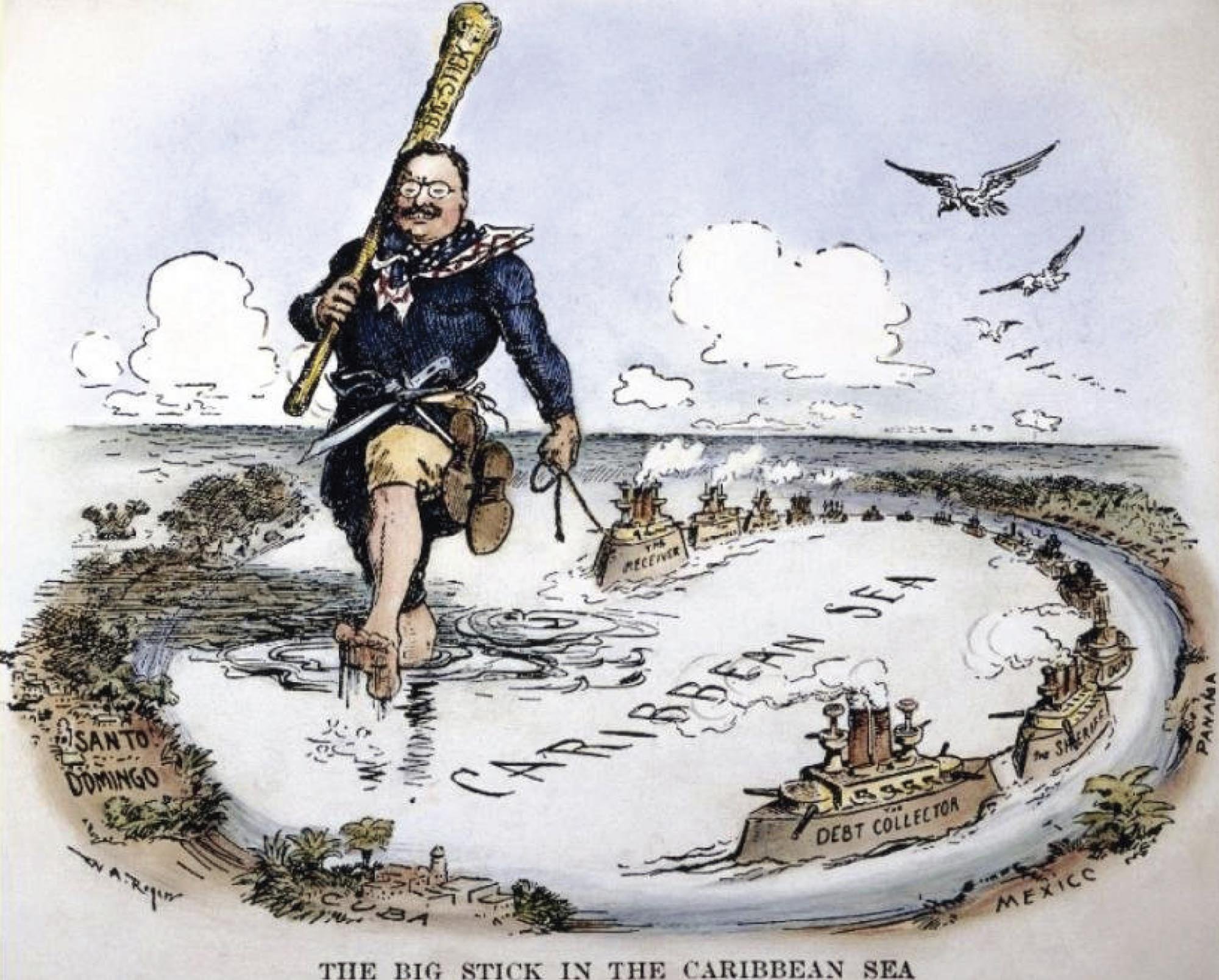
Genocide, War, Racism, Police Repression, Colonialism, Globalization, Neoliberalism, National Chauvinism, Inflation. These phenomena are rampant across the world today. Each possesses its own unique history and characteristics, yet not one alone can be used to fully summarize the world under the current capitalist mode of production. All of these phenomena are the quantitative changes that form the sum transformation of the capitalist mode of production into its advanced state, imperialism. Imperialism itself should be understood as the financialization of the productive economy. We understand financialization itself as the highest, most contradictory, and most self-destructive phase of the capitalist mode of production, where speculative markets, banks, and investment firms have monopolized the flow of capital over raw productive forces.
More specifically, Lenin says in Imperialism, The Highest Stage of Capitalism, "Imperialism is capitalism at that stage of development at which the dominance of monopolies and finance capital is established; in which the export of capital has acquired pronounced importance; in which the division of the world among the international trusts has begun, in which the division of all territories of the globe among the biggest capitalist powers has been completed."
Imperialism is a qualitative progression of and a result of social forces present in capitalist development, this being capitalism's drive to expand to new markets in pursuit of accumulating further capital and exploiting the labor of new proletarians. Lenin further elaborates "Economically, the main thing in this process is the displacement of capitalist free competition by capitalist monopoly. Free competition is the basic feature of capitalism, and of commodity production generally; monopoly is the exact opposite of free competition, but we have seen the latter being transformed into monopoly before our eyes, creating large-scale industry and forcing out small industry, replacing large-scale by still larger-scale industry". Modern examples include companies like ExxonMobil buying out Pioneer Natural Resources, consolidating their holds on natural resources such as natural gas and petroleum. These takeovers and buy-outs bring about, "concentration of production and capital to the point where out of it has grown and is growing monopoly: cartels, syndicates and trusts, and merging with them, the capital of a dozen or so banks, which manipulate thousands of millions. At the same time the monopolies, which have grown out of free competition, do not eliminate the latter, but exist above it and alongside it, and thereby give rise to a number of very acute, intense antagonisms, frictions and conflicts."
Conflicts arise between global superpowers--be they economically powerful countries or multinational corporations--as they compete for resources, land, labor, power, and influence. These conflicts seek more rapid transformations in property relations, utilizing wars in which the winners take control of economically developing (and historically exploited) countries. These countries, which are concentrated in the Global South, endure economic sanctions and wars of aggression from Western powers. Western capitalists fear the development and rise of the Global South, and so try to lock these nations into prolonged conflicts to stop their economic development, eliminating competition with the final goal of controlling the world's vast resources. It is this social relation, of winners and losers, dominator and dominated, that causes Western hegemony to reject any offers of mutually beneficial exchange coming from countries in the Global South.
In Cincinnati, we experience different symptoms of Imperialism. Deindustrialization and extreme austerity politics (the slashing of government budgets) have led to an environment where entities like 3CDC can monopolize entire neighborhoods. 3CDC and other similar cartels, syndicates, and trusts dominate local political and financial decision making. Much of our tax money ends up in the hands of police and the military industrial complex, who use the same tactics of repression at home that they use abroad. This phenomena is referred to as the Imperial Boomerang.
While Marxism understands that capitalism and by extension imperialism will continue to undergo crises at greater scale and greater rate, it does not assure us that capitalism will die of its own volition. There is much to do in terms of organizing the masses to overthrow the current state of affairs, but for that organizing to be effective, the people must know what they are fighting against. If imperialism is the progressive result of capitalist development, then it is capitalism which must be dealt a final blow. Otherwise, the ills brought on by imperialism will persist. This is the fundamental reason that as revolutionary socialists, we must be internationalist as the fight against capitalism and the fight against imperialism are one in the same, and so we must reject and fight its structures in the imperial core and its structures abroad.