
Profit over People and Planet: The Dangers of Hamilton, OH's Newest Data Center
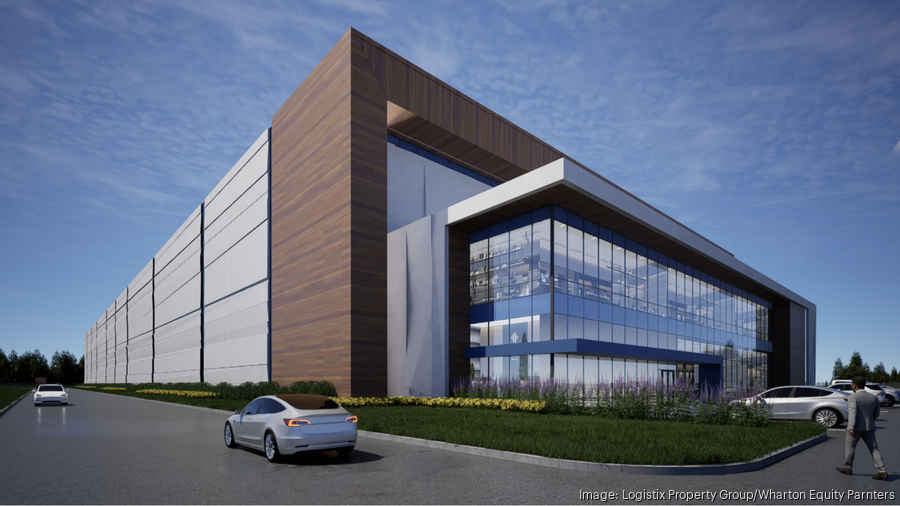
Rendering for new Hamilton data center
Introduction
Data centers are a new epidemic in the US, causing peoples’ electricity bills to skyrocket in the towns where they're being constructed. These taxpayer-funded centers pollute air and water ways, irreversibly damaging the health of the people and ecosystems around them.
Electricity costs—already skyrocketing in Ohio well beyond the rate of inflation—could potentially double in the coming years for residents in southwest Ohio thanks to the planned construction of a new data center in the city of Hamilton. The costly $100 million project would cover 29 acres of land with an estimated power demand of 100+ Megawatts. For perspective, that means the annual power consumption of this data center will be roughly equivalent to the electricity demand from around 350,000 to 400,000 electric cars or over 12,600 Ohio homes.
Despite heavy pushback from its citizens, Cincinnati City Council continues to move forward with the planning process, with the actual onsite construction beginning as early as 2026.
The Data Center Boom
A data center is a physical location that shelters infrastructure for applications and services. They serve as storage, processing, and distribution sites for the data required to operate businesses.
In recent years, there's been an explosion of data centers constructed all around the world, in large part due to the massive increase in data storage needs caused by the rise of AI technology; permits were filed for 311 data centers in the US by 2010, and by 2024, that number nearly quadrupled. This is just the beginning; recent estimates show that more than $1 trillion could be invested in data centers in the US over the next 5 years. These centers serve as data storage facilities, often for multinational tech corporations such as Google, Microsoft, OpenAI, and Meta (who, alone, plans to spend over $600 billion on AI infrastructure by 2028).
The federal government is a major backer of these data centers; the day after his 2025 inauguration, Donald Trump—alongside leadership of AI companies Softbank, Oracle, and OpenAI—announced Stargate, a project that is set to invest $500 billion in AI infrastructure (namely, data centers). Trump explicitly noted the urgency with which the United States is investing in this infrastructure and its scale, saying, "[Stargate will] move very, very quickly... this will include the construction of colossal data centers, very, very massive structures."
Both sides of the political aisle are eager to show their support for this industry. Just a week before the Stargate announcement, during the final days of his presidency, Joe Biden signed Executive Order 14110, outlining criteria and timeframes for Al infrastructure development by private entities on federal lands.
Environmental & Health Impacts
The ecological impact of these data centers is astounding. Their water and power demands are massive—some of the largest centers consume millions of gallons of water daily and as much electricity as entire cities. Data centers already account for over 4% of total electricity use in the US (up from ~2% in 2010), and estimates show that data centers in the US alone could soon consume more electricity than the entire country of Poland.
This electricity usage causes massive amounts of greenhouse gas emissions: in the US, data centers emitted over 100 million tons of CO2 in 2023. If US data centers were their own country, they would emit more CO2 than ~80% of countries in the world. At a time when emissions in the US and globally continue to increase—even though they need to be rapidly decreasing to prevent the worst possible environmental outcomes—these data centers are quickening worldwide ecological collapse.
While electricity is needed to power the facilities and the data servers they contain, a massive amounts of water is needed to cool the servers so they don't overheat. It’s not just the centers themselves that require so much water: the manufacturing of parts associated with the servers is another driver of waste. Each individual chip within a server requires thousands of gallons of water just to be created. Not only must all of this water be fresh—directly cannibalizing an already-dwindling water supply that humans and other species need to survive—it must also be clean water; it cannot be reused or recycled. As of 2021, US data centers were consuming over 150 billion gallons of water per year, taken directly from the freshwater supply. Nevertheless, nearly half of all data centers are located in areas with high water scarcity.
These data centers will also wreak havoc on public health. Estimates show that the public health-related costs from the power plant pollution associated with these facilities could be up to $9.2 billion per year. The harmful air pollutants emitted, PM2.5 and nitrogen oxides (NOx) are linked to asthma, lung cancer, heart attacks, and premature death. PM2.5 is especially dangerous, as even just minutes of exposure to it causes health risks. Those working and living by data centers aren't the only one's affected; with the wind, pollutants can travel hundreds of miles, harming communities far from the source.
Elon Musk’s xAI facility in South Memphis—a predominately Black community with high asthma rates—spews nitrous oxide from methane turbines that have none of the pollution controls normally required by federal laws, and with no Clean Air Act permits. Residents of the surrounding area say the air smells like gas and they feel as if they can’t breathe, even inside their homes.
Even if working-class people never use or interact with AI in their daily lives, they will not be able to avoid its impacts on their health and the health of their environment; capitalism is always willing to sacrifice working class people and the planet for the sake of profit.
Secrecy & Undelivered Promises
As public scrutiny into these facilities continues to grow, the corporations constructing them have turned to forcing elected officials and local residents to sign non-disclosure agreements, keeping their identity secret. These corporations are aware that the masses do not want these facilities in their backyard, so they hide behind legal agreements to avoid public backlash and accountability.
Government officials across the country are eager to hand out massive tax breaks to these corporations for the construction of these facilities, making their constituents foot the bill for the depletion of their own drinking water and skyrocketing energy costs.
Thus far, the primary “benefit” being touted by these officials and corporations is the job creation that these data centers will bring to the regions they are located in. However, what these entities don’t often share is that a vast majority of the jobs associated with the data centers are not long-term, full-time positions. Though there is job growth at first, most of those jobs are related to the construction of the site itself. After construction, the number of jobs very quickly dwindles; even some of the largest data centers staff fewer than 150 full-time employees. Economists and researchers studying the tax subsidies given to these corporations have said that the number of jobs does not make up for the cost (which, once again, is paid for without the consent of taxpayers).
This is a prime example of the way in which, at the end of the day, elected officials’ role under capitalism is not to concern themselves with the well-being of the working class; it is to represent the interests of corporations and further uphold the systems endangering our planet and our livelihoods, no matter the cost and no matter how meager the “benefits.”
In Our Backyard
In Ohio, data centers number in the hundreds. A report analyzing the economic promise, public subsidization, and hefty water and electricity demands places the total at 179, while the most recent maps count up to 194. These figures will only increase as the state provides continuous material support to the companies building them at the expense of the working people of Ohio.
According to that same report, data centers in Ohio have received $2.5 billion in state and local tax incentives between 2017 and 2024. One of these major incentives places emphasis on the creation of large-scale facilities, which will receive an exemption to the state's 5.75% sales tax. Plenty of local governments have also granted data centers a 75% property tax abatement set to last for decades.
With such incentives in place, it's no wonder that companies like Google and Meta have built data centers across Ohio. Efforts have been made to rein in these massive corporations, but they are mere half-measures. Fines against ultra-wealthy corporations, like the aforementioned Google and Meta, amount to a slap on the wrist at best while doing nothing to address the very real harm these data centers are doing to the neighborhoods that surround them and the environment as a whole.
Although most of Ohio is embracing the industry with open arms, some local governments have pushed back against the mass construction of data centers. In Lordstown, the village city council recently approved of an ordinance banning all data centers from the village. This victory hasn't come easy, however. Two companies with plans to build data centers in Lordstown are already retaliating with a lawsuit against the village officials who passed the ban.
Which brings us back to the Hamilton facility and its imminent construction: Butler County residents are already pushing back. Residents are concerned about the increased light and noise pollution, as well as the environmental impacts the facility will bring to the city—much of the project site is over a forest. Others find Logistix's promises to be vague and unsubstantiated. They rightfully have no reason to trust the word of a faceless corporation seeking profit above all else.
The Hamilton facility stands as yet another example in the extensive list of repressive industries which exploit us. ICE continues to operate with impunity, using Butler County Jail as one of its primary detention centers. Cincinnati's Cop City started development last year to the benefit of none but the ruling class. These attacks on the working people of southwest Ohio, which perpetuate an unsafe and unhealthy living environment, must be stopped, and we cannot rely on the state to act against its own interests in order to do so.
How to Resist These Data Centers
Residents have taken to pressuring their local politicians to reconsider their support for the construction of these data centers. According to Data Center Watch, a project led by AI security firm 10a Labs, "In Q2 2025 alone, an estimated $98 billion in projects were blocked or delayed, more than the total for all previous quarters since 2023".
In October 2025, Microsoft halted plans for a 244-acre data center in Caledonia, Wisconsin after residents in the community raised concerns over the environmental pressures on wetlands and wildlife, local impacts to the community, and opposition to the construction altogether. In this case, the project required rezoning approval from the local village board.
In some cases, even with community pushback, local politicians still work with the corporations to push the projects forward. The Caledonia village board is working with Microsoft to find a new, more “suitable” location for the data center. Nearby in Wisconsin, a data center in Mount Pleasant was approved by city council, and another in Port Washington will move forward despite hundreds of citizens voicing opposition. The companies behind these data centers are committed to seeing these projects proceed regardless of the setbacks.
The organization and mobilization of local residents against these data centers is critical. Voicing opposition at city council meetings, attending community feedback meetings, demanding additional environmental impact and community impact studies, these are all ways to oppose the construction of these data centers. But these bureaucratic methods of opposition can only do so much. As we can see, more often than not, these tactics only serve to delay the projects, and they require sustained buy-in not just from the residents, but also the local politicians who must be convinced before the deals are signed. Frequently, communities are not even aware of the projects until after the deal has been made.
Additionally, resisting the construction of a data center in one area may only end up offloading the impacts onto another community. The corporations behind these projects will just move them to an area where they will face less resistance; communities with less time and energy to oppose them.
Organizing against these centers may delay their construction or force them to moved elsewhere, but that only would be a temporary “solution” to an issue rooted in capitalism's prioritization of profit above all else. As massive, multinational tech corporations rely more and more on generative AI and continue to foist it upon the general public, the associated energy requirements and data centers will continue to grow, whether we want them or not.
Ultimately, revolutionary socialism is the only true solution to this and all other atrocities being committed against the working class and the planet by corporations and politicians. The capitalist ruling class will continue to immiserate us until there's nothing left unless you, your friends, your neighbors, your coworkers, and your family get politically involved (and not just in electoral politics) and start organizing for a society that's foundation is not predicated on the exploitation of people and the planet.
We stand unequivocally with the residents of Hamilton against the construction of this new data center and against all such data centers being constructed to support repressive and harmful technologies that only benefits the capitalist ruling class at the expense of all of us and our future.